


What Will You Learn from This Report:
Poland is currently one of the most important business hubs in Central and Eastern Europe. A large domestic market, strategic location, growing economy, broad pool of skilled professionals, and well-developed office markets make the country an attractive destination for investments, shared service centers, and branches of international companies. In this report, we present key data concerning Poland’s major cities, their economic potential, and the office real estate market.
Office Space Available for Lease in Poland
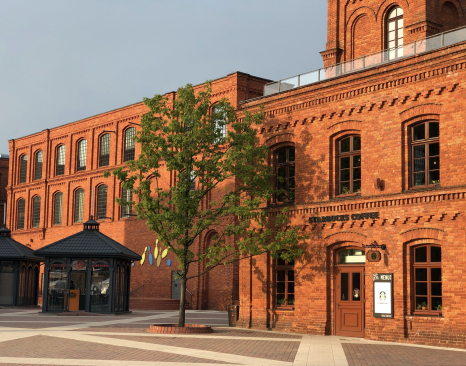
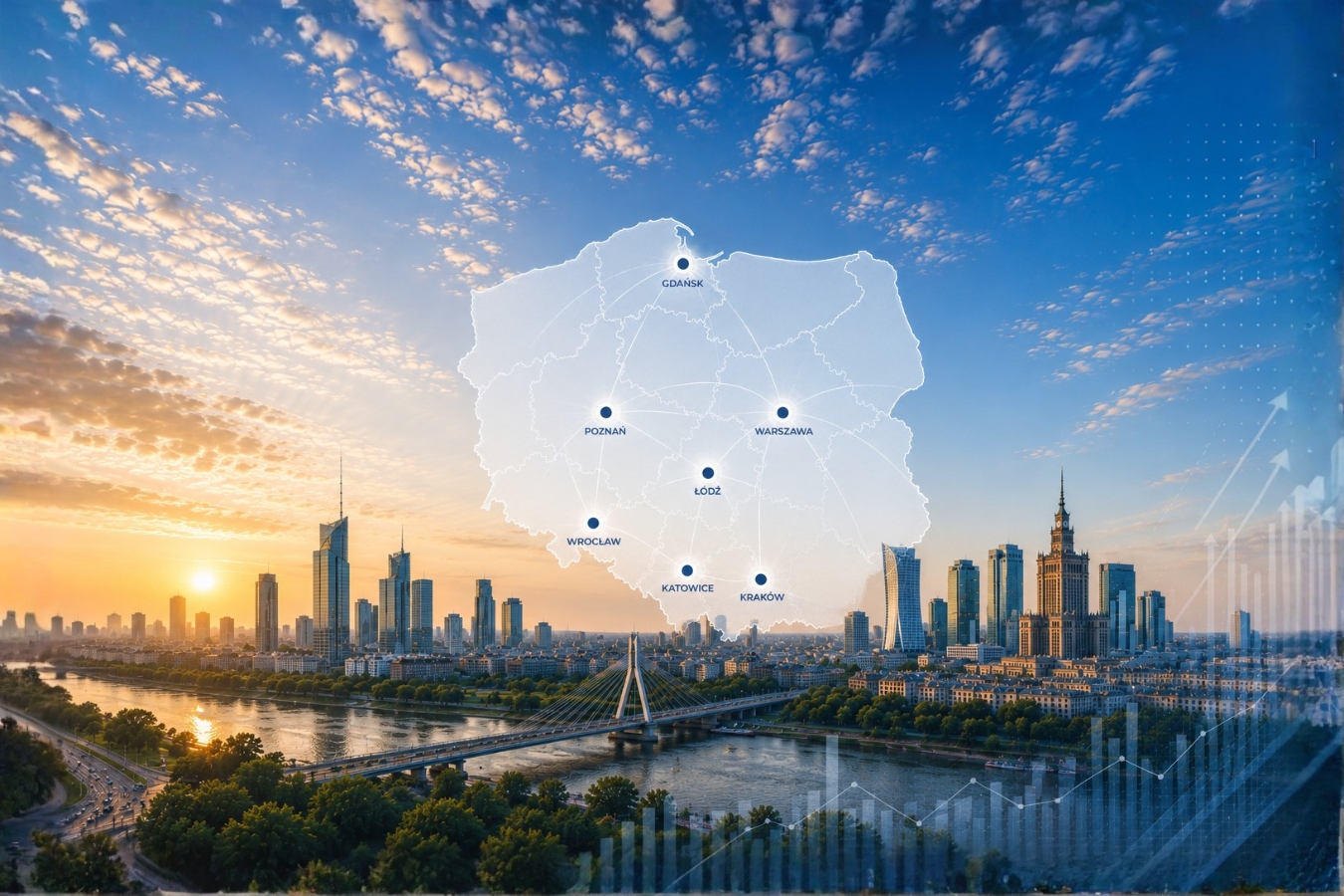
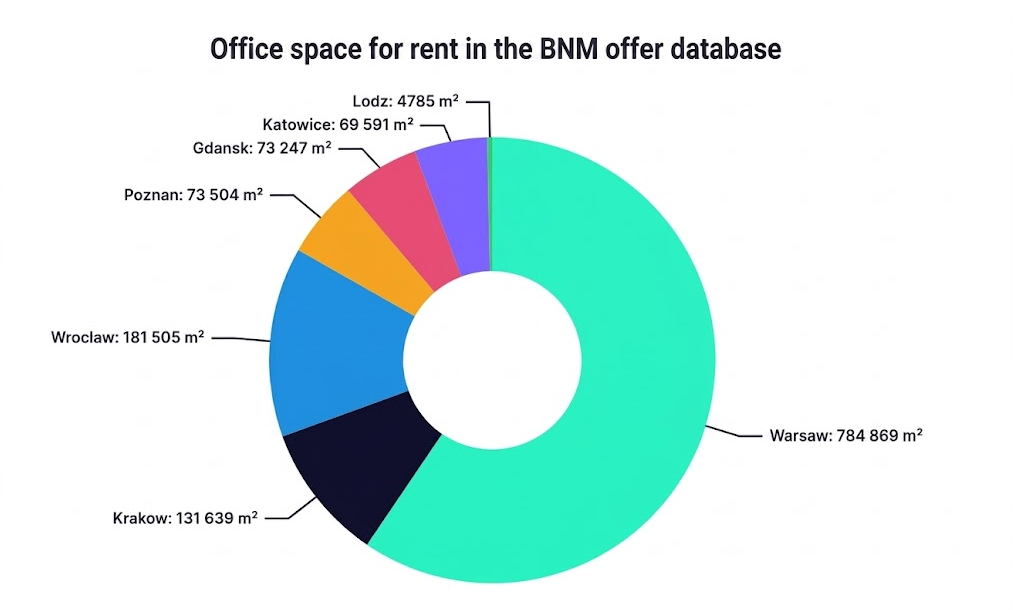
The Polish office market is concentrated around seven major urban centers, with Warsaw — the capital city — offering the largest office stock. Nearly half of all modern office space in Poland is located in Warsaw. Other leading office markets include Kraków, Wrocław, Katowice, Poznań, and Gdańsk. Łódź completes the group of key regional markets.
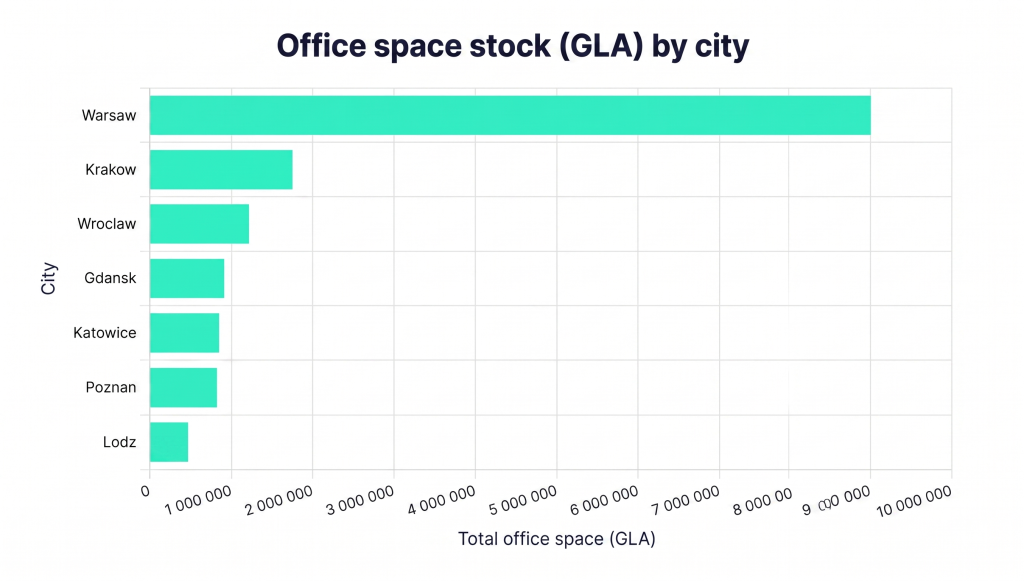
BNM – Real Estate Advisory also operates in each of these cities. BNM advisors know the local markets thoroughly and can quickly prepare office space proposals tailored to companies needs. The chart below presents the volume of office space available for lease in major Polish cities.
Recovery of the Office Market
After a period of rapid growth, development activity in the office sector weakened significantly between 2020 and 2024. This was largely driven by the rise of hybrid work models and a more cautious approach among tenants toward expansion. A noticeable shift occurred in 2025. Increased demand for office space combined with limited new supply resulted in a decline in vacancy rates.
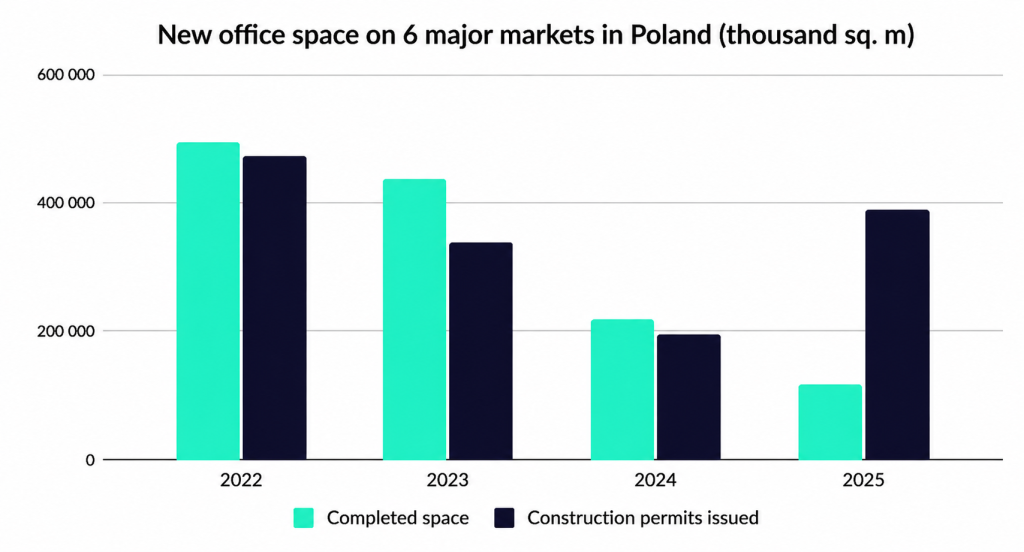
This created favorable conditions for launching new developments. According to data from Statistics Poland (GUS), authorities issued building permits for 57 office buildings across the six main markets in 2025 alone, with a total planned area of nearly 390,000 sq m. During the same period, completed office space did not exceed 117,000 sq m.
Office Rental Costs in Poland
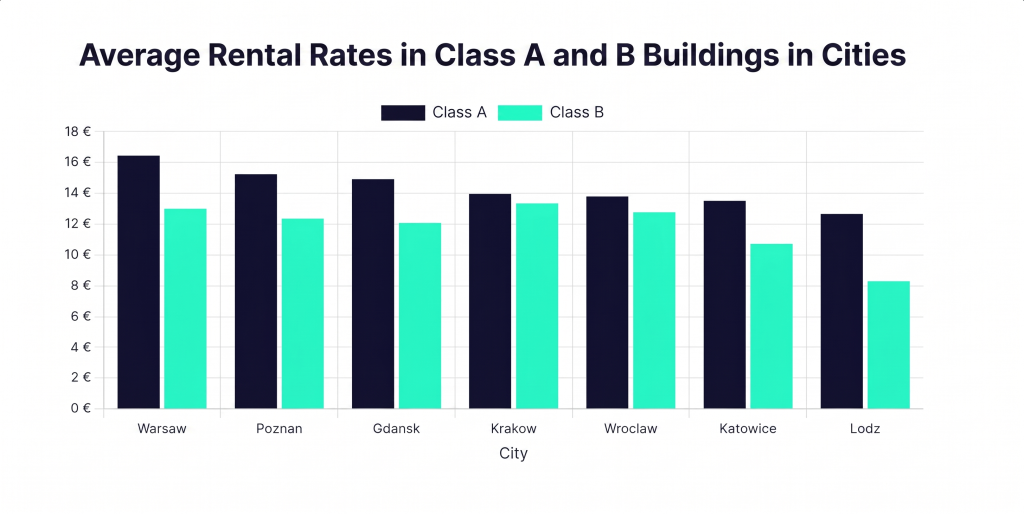
Office rental prices in Poland remain attractive compared to other developed countries in the region. Warsaw clearly leads in terms of pricing. Average rental rates for Class A and Class B office buildings in major Polish cities are presented in the chart below. On average, they amount to:
- from approximately EUR 12/sq m in Łódź to over EUR 16/sq m in Warsaw for Class A office buildings,
- from EUR 8/sq m in Łódź to approximately EUR 13/sq m in Warsaw for Class B office buildings.
To calculate the total office occupancy cost, operating expenses must also be included. These average from around PLN 25/sq m in Łódź to PLN 33/sq m in Warsaw. In addition to rent and service charges, tenants should also consider parking costs and electricity consumption. Most answers to your questions can be found on our website by browsing listings or sending us an inquiry through our contact form. We will be happy to help.
Poland for Investors
Poland’s investment attractiveness is determined not only by the size of its economy, but also by its population, education levels, and labor market indicators.
From an investor’s perspective, particularly important indicators include employment levels, unemployment rates, wages, and household purchasing power. These factors define not only the availability of skilled workers, but also the strength of domestic demand, which is crucial when assessing the overall development and stability of the national economy.
The charts below present the most important indicators concerning human capital resources. They are updated on an ongoing basis based on official Statistics Poland (GUS) databases — all conveniently available in one place.
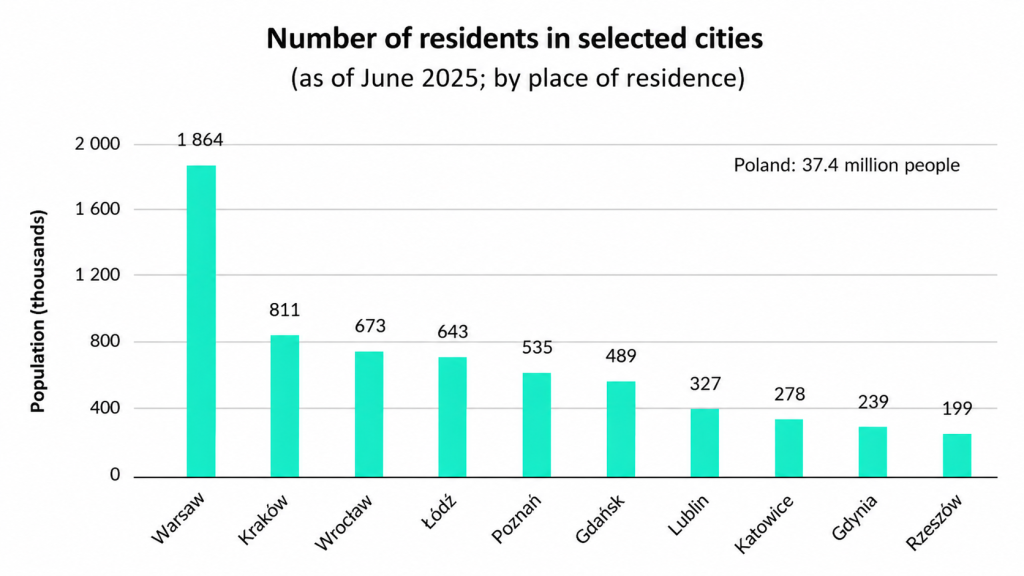
Poland is characterized by a geographically diversified population distribution — the country consists of 16 provinces, and 34 cities have populations exceeding 100,000 residents. The office market is concentrated in the largest urban centers located across different regions of the country.
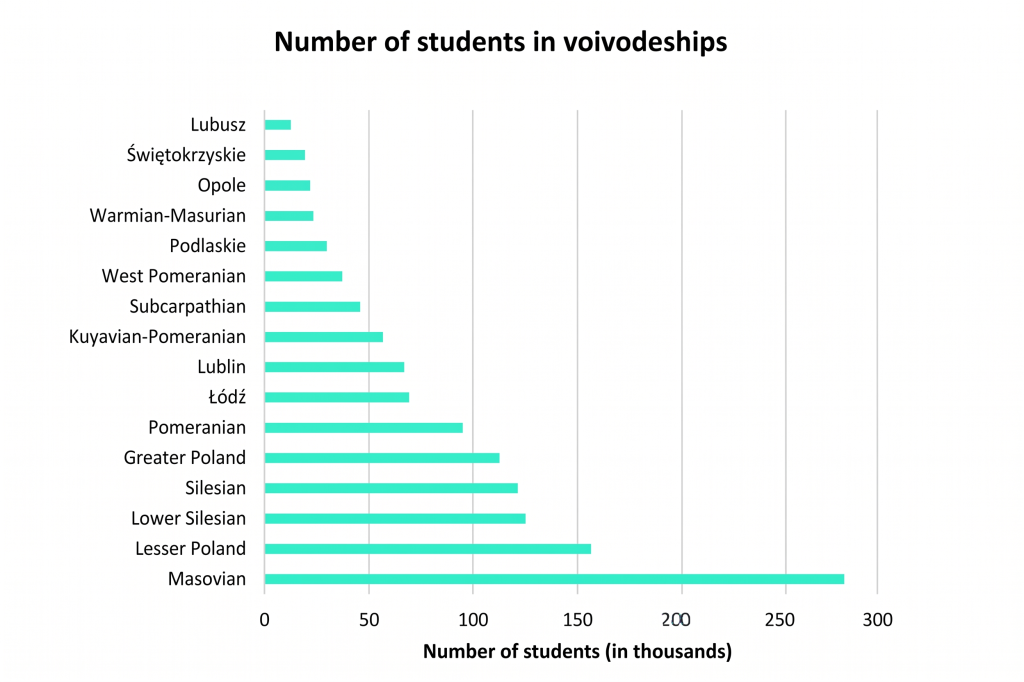
Like many developed European countries, Poland faces unfavorable demographic trends, including declining birth rates and an aging population. At the same time, the share of people pursuing higher education has been increasing for years. More than 60% of people aged 19–24 are enrolled in universities. A decade earlier, fewer than half of people in this age group pursued higher education. The highest participation rates were recorded in the following regions: Mazowieckie (92.7%), Dolnośląskie (84.7%), Małopolskie (77.4%), and Pomorskie (69.0%).
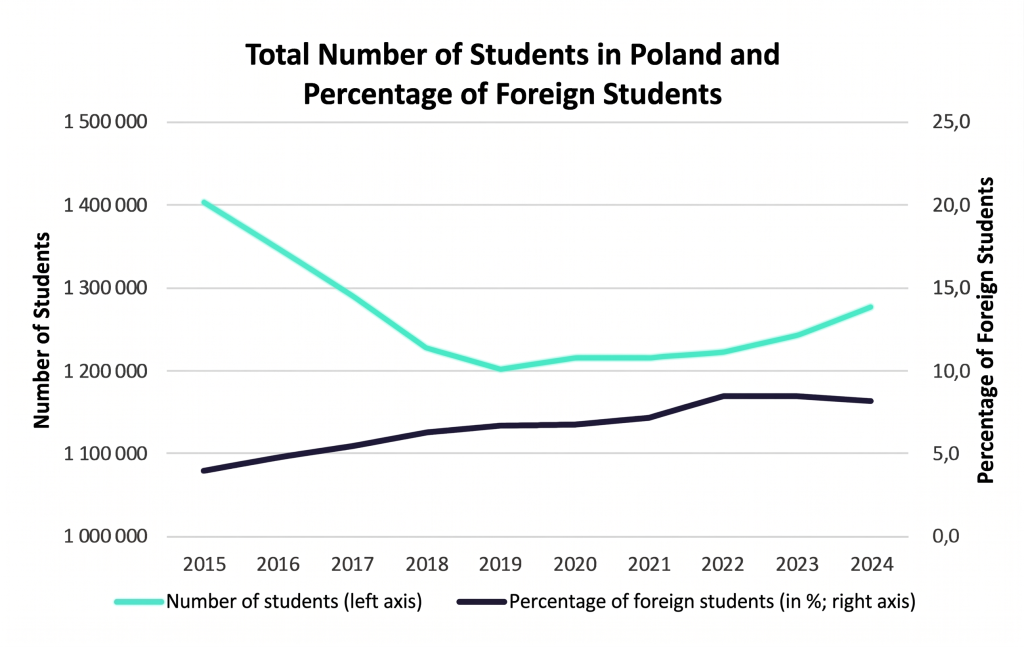
In 2024, 1.28 million people studied at Polish universities, and the number of students has been steadily increasing since 2019. Another important trend is the internationalization of Polish higher education institutions. In the 2024/25 academic year, international students accounted for more than 8% of all students. The largest groups came from Ukraine and Belarus, while significant numbers also arrived from Turkey, Azerbaijan, and India. Recently, the number of students from China has also been growing.
Quality of Life in Poland
Poland is among the economies that have developed most rapidly over the past decades — not only in Europe, but globally. The key drivers of this growth were the political and economic transformation, integration with Western economies, and membership in NATO and the European Union. These conditions created a stable foundation for the entrepreneurship and work ethic of Polish society.
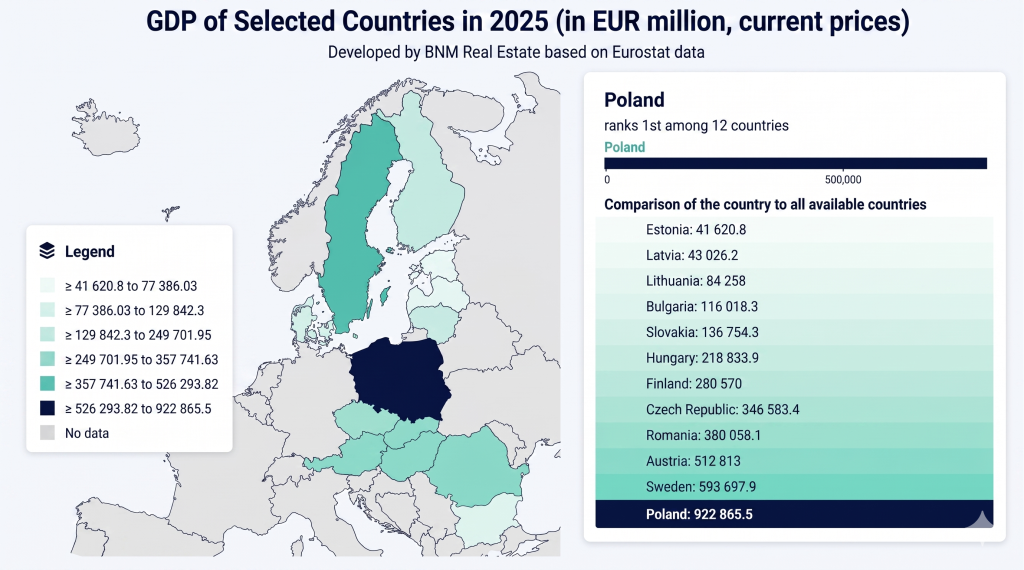
Poland’s advancement has been remarkable — from being classified as a poorly developed country in 1989 to receiving an invitation to join the prestigious G20 group in 2026. At the same time, thanks to its diversified economic structure and strong domestic demand, the Polish economy has demonstrated considerable resilience to economic fluctuations and external shocks.
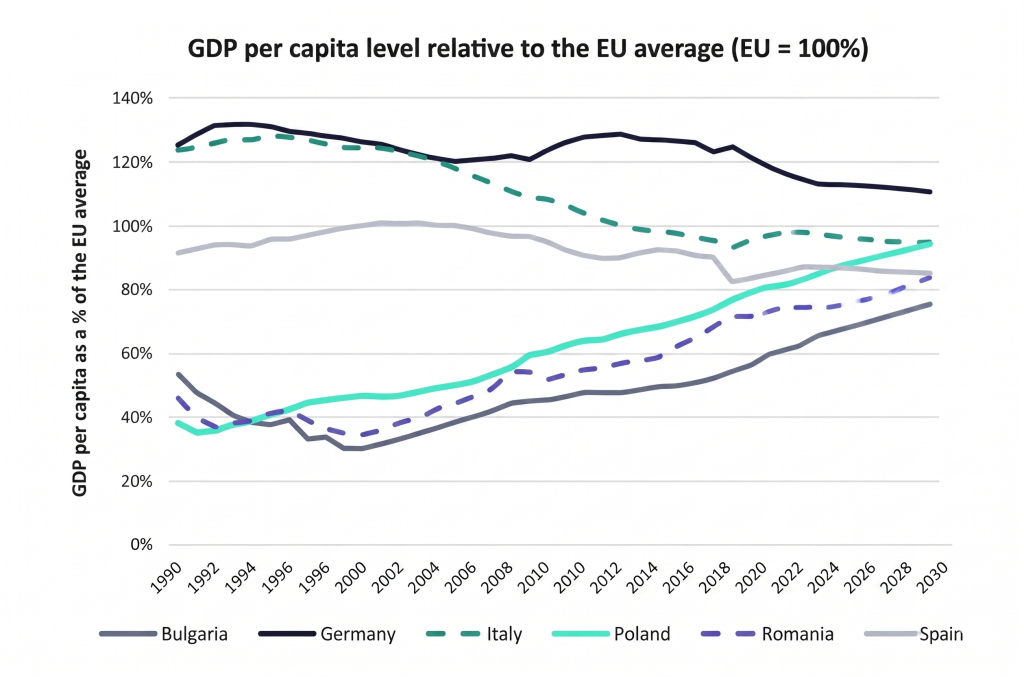
As a result, since 1989 — the symbolic end of the centrally planned economy — Poland has been rapidly catching up with Western countries. This is clearly illustrated by GDP per capita data. While in 1990 Poland’s GDP per capita represented only 38% of the EU average, by 2025 it had risen to 85%. Furthermore, if IMF forecasts prove accurate, by 2031 Poland’s GDP per capita will surpass Spain’s level and approach Italy’s, reaching 94% of the EU average.
The Polish labor market is characterized by low unemployment. According to Statistics Poland (GUS), the unemployment rate in February 2026 stood at 6.1%, while according to Eurostat methodology it was only 3.2%. This gave Poland the lowest unemployment rate in the European Union, jointly with Bulgaria and the Czech Republic. In the largest cities, unemployment rates can be several times lower than the national average. In February 2026, the unemployment rate in Warsaw, Poznań, and Katowice was estimated by GUS at below 2%.
In recent years, labor supply has been strongly supported by migration, particularly following Russia’s invasion of Ukraine. During that period, approximately 1–2 million people arrived in Poland. The integration of refugees proceeded efficiently, with more than two-thirds of Ukrainian arrivals entering the labor market — a significantly higher rate than in many Western European countries.
At the same time, rapid wage growth improved employees’ financial situation and supported consumer demand. However, from an investor’s perspective, it also meant a gradual reduction of Poland’s cost advantage over some emerging markets. This contributed to the advancement of Polish business service centers within global value chains, leveraging the high quality of Poland’s human capital.
The country has a broad base of specialists, graduates of technical and business faculties, and managers with experience gained in international environments. This is one of the reasons why Poland attracts not only operational activities, but also increasingly advanced business, technological, and managerial functions. Despite this, labor costs in Poland remain significantly lower than in many Western European countries.
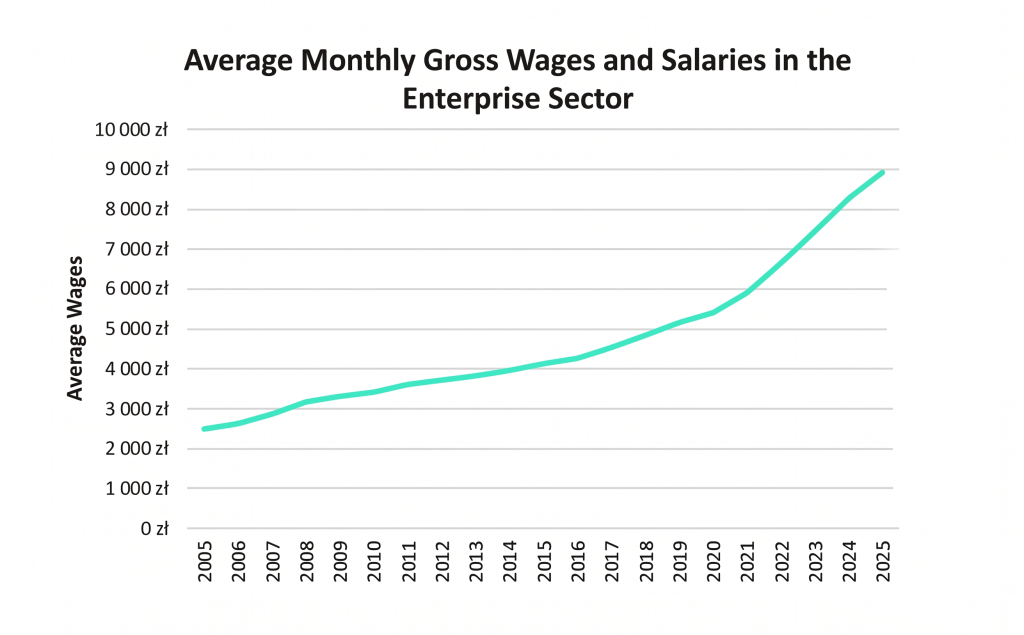
Polish universities have educated many highly skilled programmers, managers, and technicians, which has become a key driver of both wage growth and the competitiveness of Polish enterprises. Poles increasingly hold management positions in the Polish branches of international corporations, while also serving in key roles at the global headquarters of companies such as OpenAI, Warner Bros., ICEYE, and Philip Morris International.
From the Author: A Brief Overview of Poland’s Key Cities
Warsaw
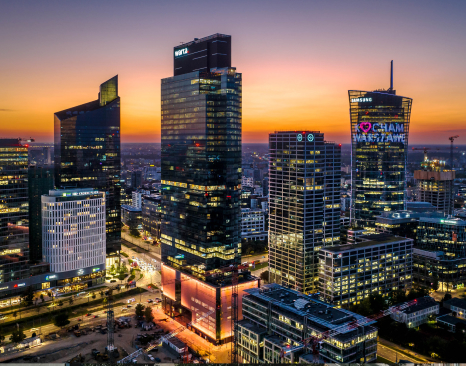
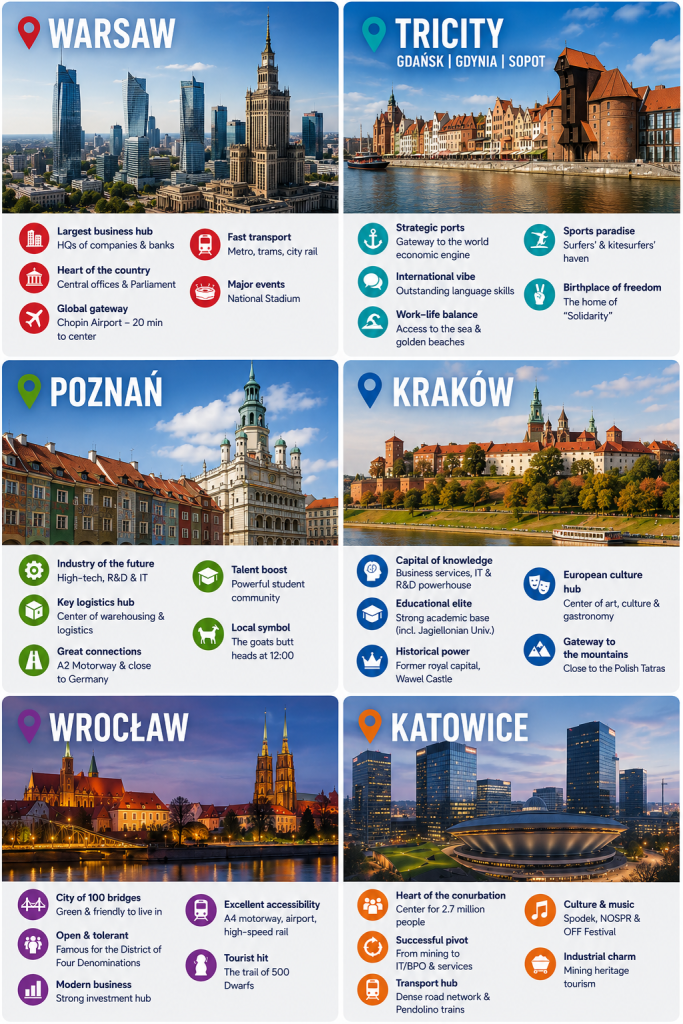
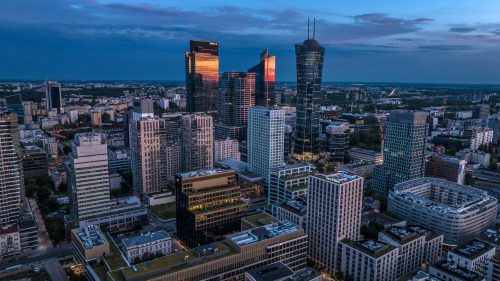
The capital and largest business hub in Poland, offering a broad pool of skilled professionals, advanced business services, and central government institutions. Warsaw is home to the country’s key institutions and parliament. Banks, nationwide television networks, major consulting firms, and numerous small businesses are headquartered here. Warsaw is often chosen as the headquarters location for companies seeking a strong presence across Poland and the wider region. This is facilitated by Warsaw Chopin Airport, located approximately 20 minutes by car from the city center. The city offers an extensive transportation network including railways, highways, metro lines, buses, and trams. Public transportation is affordable and complemented by public bicycles, electric scooters, and ride-hailing apps. Near the city center stands the National Stadium, which hosts major sporting events and concerts.
Tricity: Gdańsk, Gdynia, and Sopot
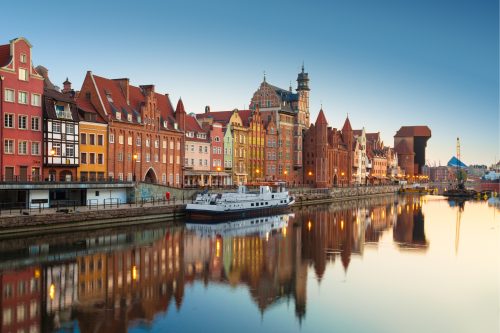
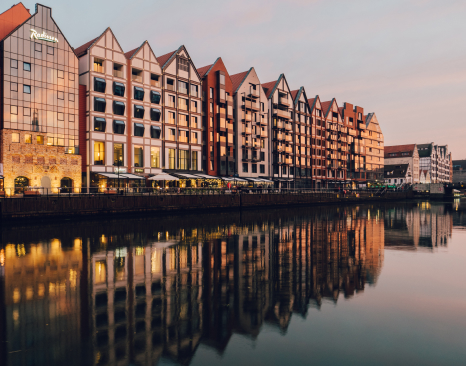
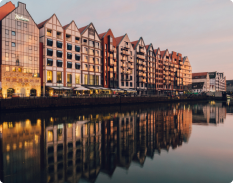
An urban area consisting of three cities: Gdańsk, Gdynia, and Sopot. The region combines an international character, a developed business services sector, and technological specialization. Its strengths include language skills, strong universities, and an attractive living environment with access to the Baltic Sea and Puck Bay. These advantages have attracted investors — especially from Northern Europe — as well as tourists for many years. Efficient transport infrastructure includes expressways, an international airport, and rail connections. The region’s seaports are strategically important for both the regional and national economy. Together with the Hel Peninsula, the Tricity area is a popular destination for surfers and kite-surfing enthusiasts, while its long golden beaches attract millions of tourists annually. Gdańsk also holds a special place in history and politics as the city where World War II officially began and where the Solidarity movement, led by Lech Wałęsa, emerged during the 1980 strikes that contributed to the fall of communism in Poland in 1989.
Poznań
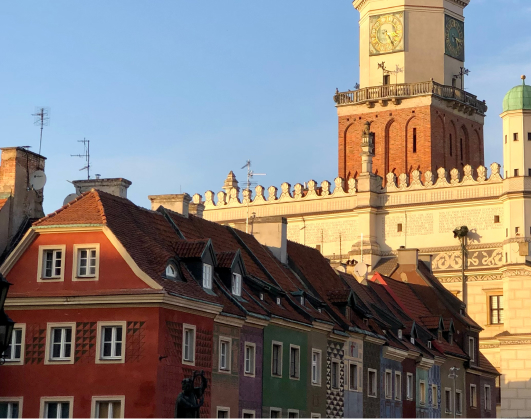
The capital of the Wielkopolska region, known for its strong economy and vibrant student atmosphere. Poznań offers a well-balanced market combining modern services, IT, R&D, high-tech manufacturing, logistics, and warehousing. The city identifies these sectors as key growth areas. The local business environment is highly regarded for investor cooperation, public transport, workforce availability, and relationships with universities. The strategically important A2 motorway, connecting Eastern and Western Europe as well as the Poznań, Łódź, and Warsaw metropolitan areas, runs through the city. Poznań also offers an international airport and efficient rail connections between Poland and Germany. The city is famous for its beautiful Old Town and the mechanical goats on the town hall tower, which butt heads every day at noon.
Kraków
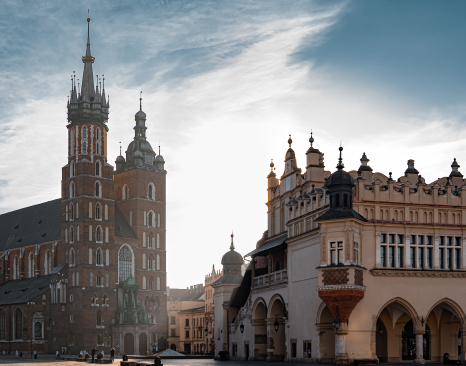
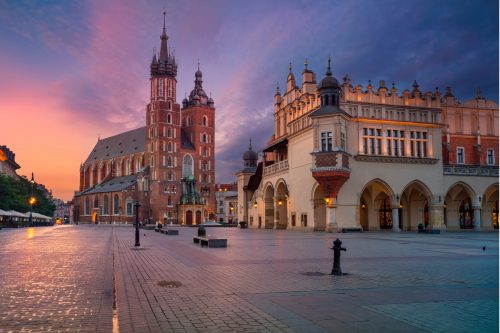
The former capital of Poland, a major cultural and academic center located on the Vistula River in southern Poland, near the Tatra Mountains. Kraków is also the country’s largest regional office market and one of the strongest hubs for knowledge-based business services. The city’s advantages include the scale of its office market, strong academic background, and developed business services, IT, and R&D sectors. Kraków benefits from excellent transportation links provided by railways, expressways, and the nearby airport. Due to its rich historical heritage, Kraków attracts millions of international tourists every year. The city is renowned for landmarks such as Wawel Castle, Jagiellonian University, and the historic Old Town, as well as its extensive culinary, entertainment, and cultural offerings. Kraków was the first Polish city to be named a European Capital of Culture.
Wrocław
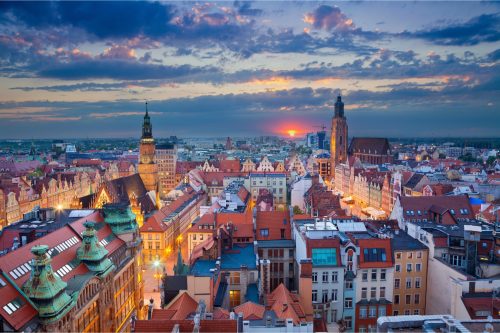
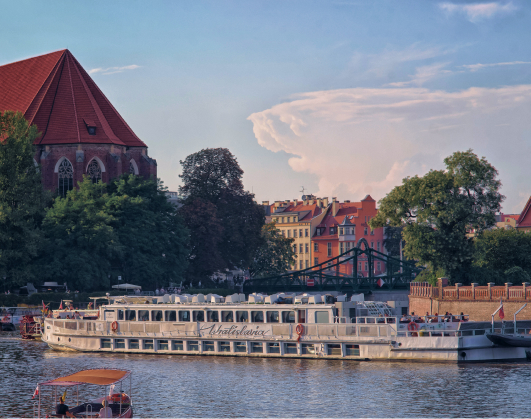
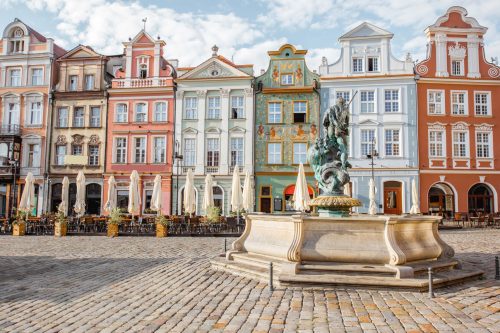
The capital of the Lower Silesia region, Wrocław is a green, modern, and highly livable city. It features more than 100 bridges. A symbol of multiculturalism and tolerance is the District of Four Denominations, where an Orthodox church, Catholic church, Protestant church, and synagogue stand side by side. Wrocław is easily accessible via the A4 motorway, by plane, or by high-speed rail. The city has a rich history, and one of its most distinctive tourist attractions is the collection of around 500 bronze dwarf statues placed throughout the city.
Katowice
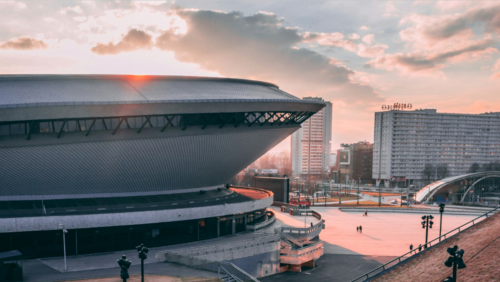
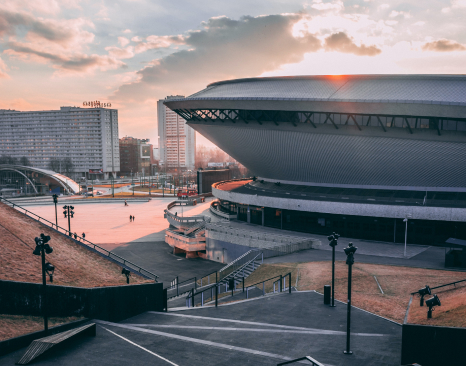
The capital of the Upper Silesian metropolitan area, consisting of several interconnected urban centers with a combined population of 2.7 million people. Historically associated with the mining industry, which for decades formed the backbone of the local economy, Katowice has undergone a major transformation. While the city remains an important industrial center, Katowice and the surrounding metropolitan area have developed into a strong player in business services, IT, and knowledge-based industries. The city is very well connected with neighboring urban centers through an extensive road network, while high-speed Pendolino trains and air connections provide efficient access to other Polish cities. From a tourism perspective, Katowice is known for underground mine tours, concerts at NOSPR, the futuristic Spodek arena, and the annual OFF Festival Katowice.
Looking for comprehensive office real estate advisory services? Contact us:
BNM – Real Estate Advisory
➡️ [email protected]
➡️ +48 574 238 708


Explore more ways we can assist you
We operate on many levels
Representation
Representation
Markets