
Table of Contents
Can an older office building compete with new developments without being demolished and rebuilt from scratch? An analysis of Warsaw office investments revitalised in recent years, conducted by BNM – Real Estate Advisory, shows that a properly planned modernisation increases the building’s attractiveness to tenants, enables the owner to raise rental rates, and at the same time reduce vacancy.
Demolish or Give the Building a Second Life?
Some older office buildings are disappearing from the city map, making way for new developments. One example is the 30-year-old Ilmet office building at Rondo ONZ, which has been designated for demolition. A new office building, Warsaw One, planned to be over 100 metres taller, is set to replace it.
Demolishing an old building and constructing a new, usually larger one is not possible in every case. Restrictions resulting, among other things, from local spatial development plans, plot parameters, heritage protection or current technical requirements may mean that increasing the built-up area will not be possible.
An alternative to demolition is therefore modernisation – making use of the main advantage of older buildings, which is usually their excellent location, and bringing them up to the standard that tenants expect today. The Warsaw market shows that this strategy works: some owners of office buildings from the 1990s and early 2000s have invested in renovating them and are now successfully attracting new tenants and re-commercialising their projects.
From Renovation to New Lease Agreements
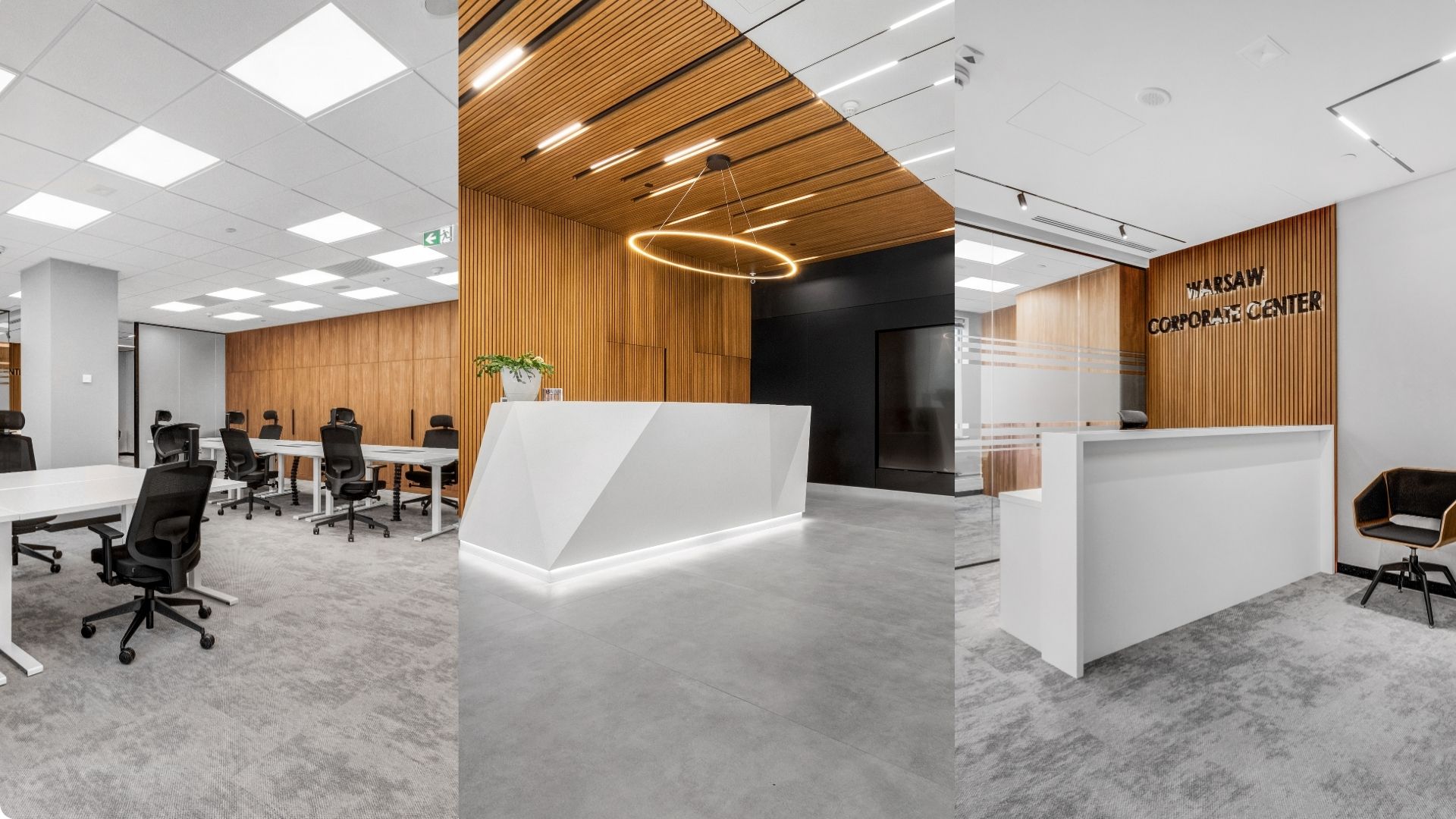
The impact of revitalisation on a property’s appeal among new tenants is well illustrated by the example of Warsaw Corporate Center. The modernisation of the office building was divided into two main stages: visual and functional, and technical. The first included, among other things, the modernisation of the lobby and common areas, the renovation of restrooms, and an update of the visual identity. The second involves a comprehensive modernisation of the HVAC systems. The works were planned logistically in such a way as to ensure the smooth operation of the tenants at the time.
– “Immediately after the renovation of the 7th, 8th and 9th floors, new tenants interested in the renovated spaces came forward, and we signed lease agreements with them shortly afterwards. A well-executed revitalisation not only improves the comfort of everyday use for existing tenants, but also increases the property’s appeal to new companies, which translates into reduced vacancy rates.” – says Jakub Bereś, Head of Landlord Representation at BNM, the advisory firm responsible for leasing the space in the WCC building.
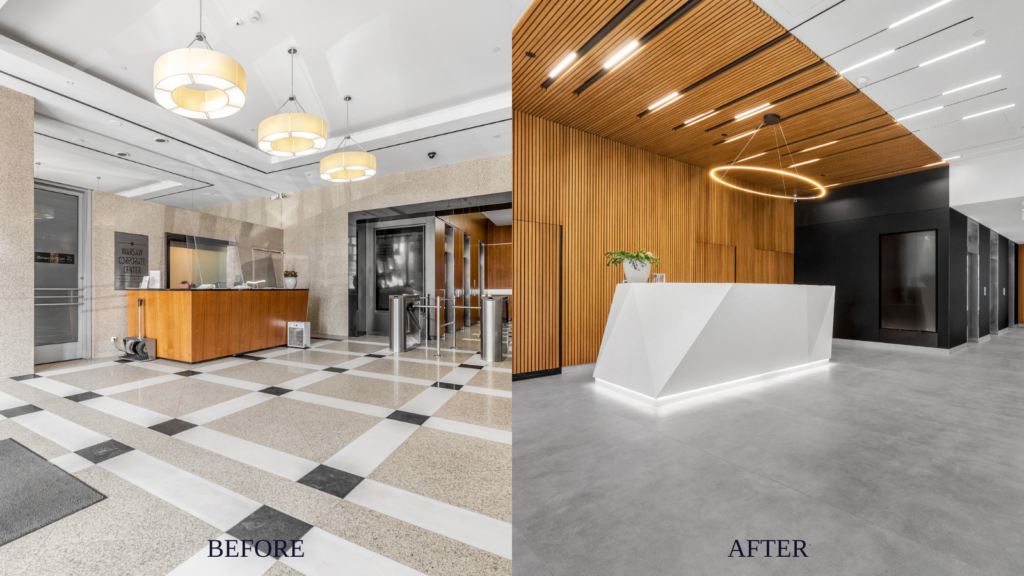
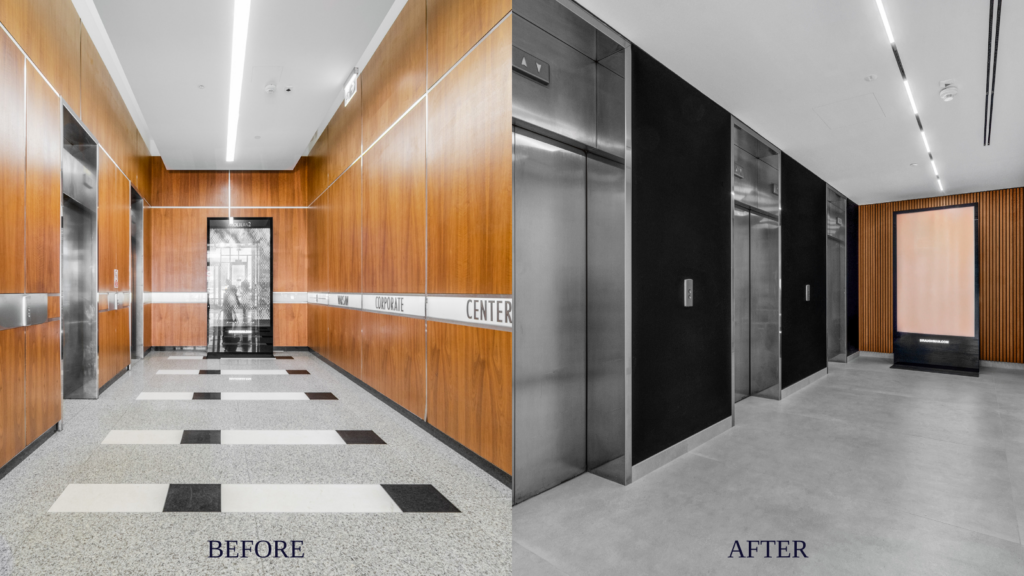
BNM’s analysis of selected cases of Warsaw office building revitalisations shows that modernisation translates into an average increase in the building’s occupancy rate of approximately 30%. It is worth noting, however, that this effect depends, among other things, on the scope and manner in which the revitalisation works are carried out. In the case of the most extensive and time-consuming modernisations, owners often terminate lease agreements in advance. The occupancy rate of such a property may initially fall to zero, only to subsequently increase as the modernised spaces are gradually brought back to the market.
Higher Rents + Lower Vacancy = Higher Value
From an owner’s perspective, modernisation makes sense when it translates into commercial performance. An analysis of selected Warsaw projects conducted by BNM shows that well-planned revitalisation can typically result in a 10–15% increase in rental rates, although increases of more than 30% are also possible.
– “Increasing the rental rate is only part of the commercial success. Equally important is generating new demand, reducing vacancy, and achieving higher effective rents. A well-planned revitalisation protects a building from tenant outflow and enables it to compete effectively with new supply. As a result, the building’s net operating income increases, which directly translates into a higher market valuation of the asset and enhances its transaction attractiveness in the eyes of investors,” says Agnieszka Chrzanowska, Leasing Manager & Capital Markets at BNM.
Renovation Can Take Many Forms
In one case, it may mean refreshing the lobby and common areas; in another, redesigning the façade and surroundings and introducing new functions; while in its most advanced form, it may involve replacing almost all of the building’s technical infrastructure and creating a product that can compete with new developments. Three selected examples illustrate this well: Skylight and Lumen, HOP and V Tower. Each of these projects represents a different scope of transformation, while also showing that a complete redevelopment is not always necessary to significantly improve the attractiveness of an older building.
#1 Skylight and Lumen – “Lifting” the Common Areas
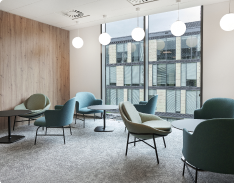
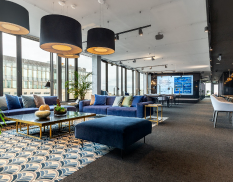
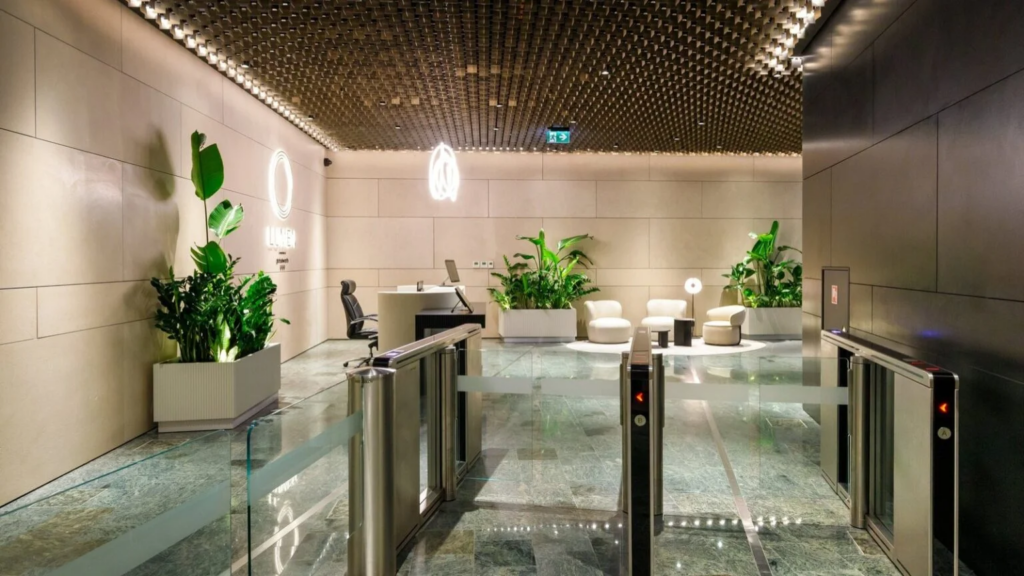
A good example of a situation where you do not need to do much to change the perception of a building. The lobby and reception areas are, in a way, the showcase of an office building, and it was precisely these spaces in the Skylight and Lumen buildings that underwent a transformation in 2024. Introducing a new visual identity, warm lighting, natural materials, soft furnishings and plenty of live plants created a more comfortable atmosphere for meetings and relaxation. The buildings are also fully occupied by tenants.
#2 HOP on Chmielna – A New Face for a Postmodern Building
The transformation of the HOP building demonstrates an interesting approach that focuses on bringing out the building’s postmodern character rather than concealing it. The modernisation covered the interiors, façade and the area surrounding the building. Stripes and geometric patterns in warm colours can be found inside, on the façade, and even in the underground car park. The project’s designer decided to highlight the building’s most distinctive features, such as the beautiful green marble. The icing on the cake was the opening of Lupo Pasta Fresca restaurant, whose garden blends with the building’s green area, as well as a boutique coworking space open onto the building’s lobby. A distinctive, cohesive design takes centre stage here, while spaces with different functions seamlessly flow into one another. As a result, the building was fully leased.
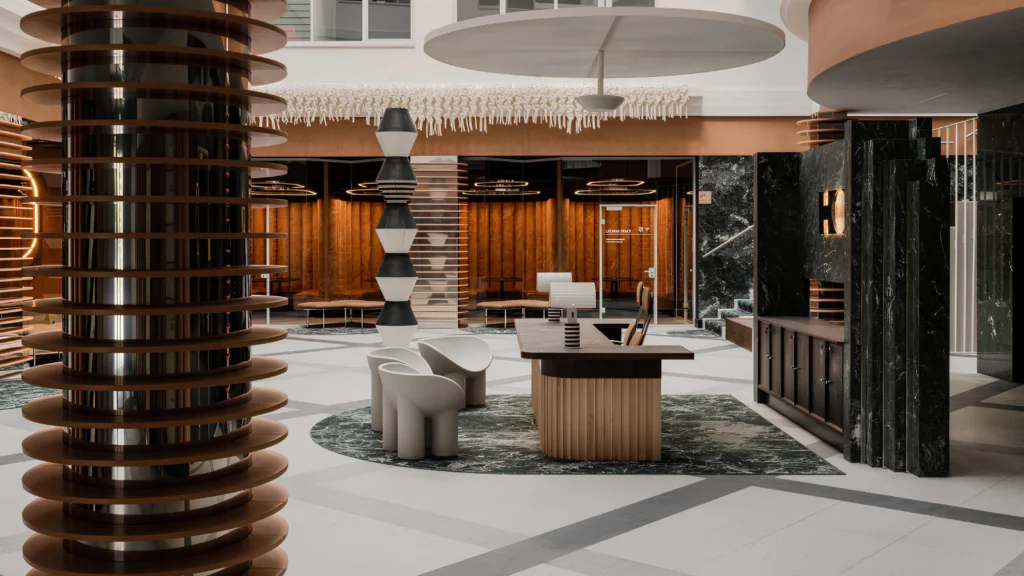
#3 V Tower, formerly Warta Tower – A New Building Within an Existing Structure
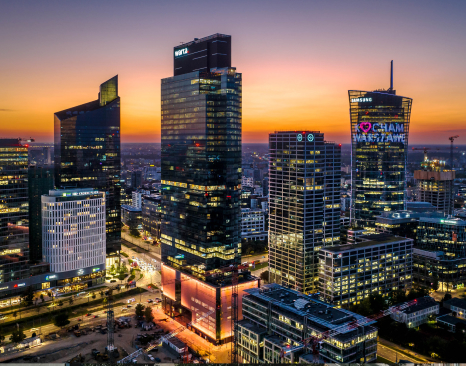
V Tower is by far the most advanced example of the three. The modernisation involved the replacement of virtually all of the building’s technical systems, the redevelopment of the garage, and the complete redesign of the common areas – the lobby, relaxation area, green spaces and cycling infrastructure. This was accompanied by a change of name and visual identity. This is revitalisation with a capital “R”, resulting in what is essentially a new product on the office market.
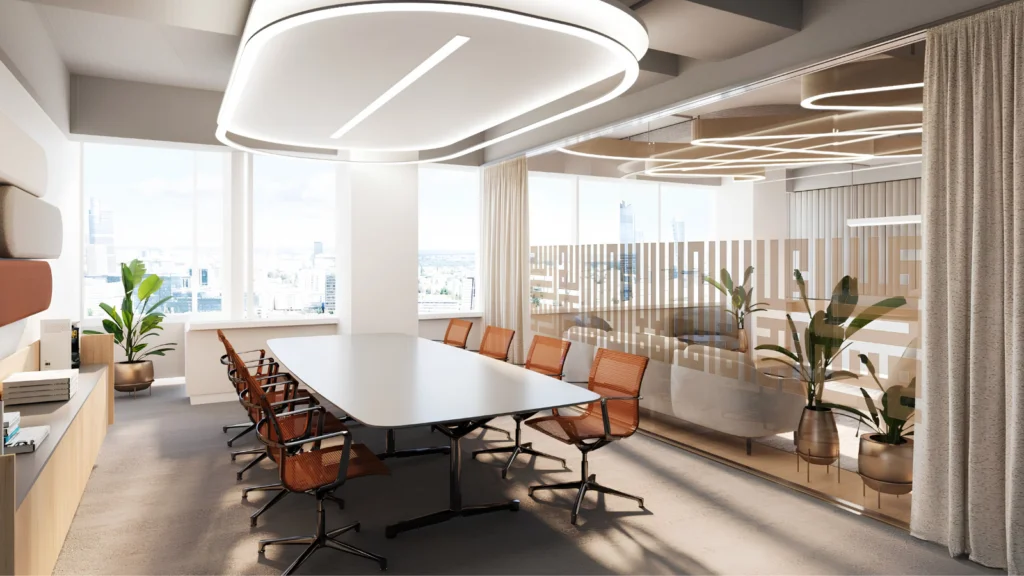
The examples of WCC, HOP, Skylight and Lumen, and V Tower show that revitalisation can vary in scale – from refreshing a lobby to a comprehensive redevelopment of the building. Regardless of the scope, its aim is to adapt the property to tenants’ expectations and improve its commercial performance. A higher standard can mean higher rents, increased occupancy and, consequently, an increase in the property’s value. An older office building therefore does not necessarily have to disappear from the market – properly carried out modernisation can effectively restore its competitiveness.


Explore more ways we can assist you
We operate on many levels
Representation
Representation
Markets